
Find EV Charger Installation in Your Area
- EV Charger Installation in Edmonton
- EV Charger Installation in Victoria
- EV Charger Installation in Winnipeg
- EV Charger Installation in Fredericton
- EV Charger Installation in St. John's
- EV Charger Installation in Yellowknife
- EV Charger Installation in Halifax
- EV Charger Installation in Iqaluit
- EV Charger Installation in Toronto
- EV Charger Installation in Charlottetown
- EV Charger Installation in Quebec
- EV Charger Installation in Regina
- EV Charger Installation in Whitehorse
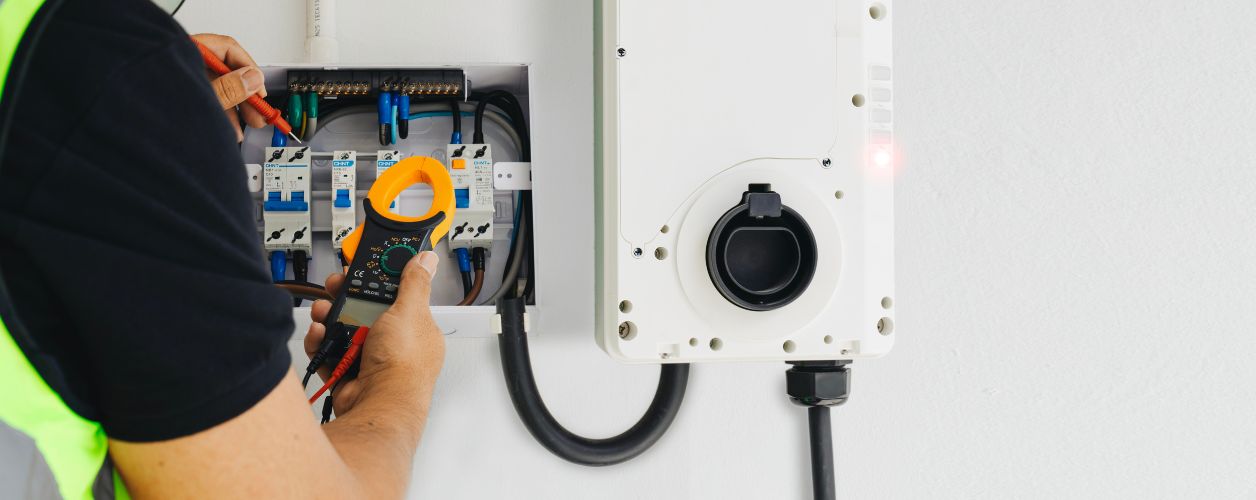
Your Trusted Source for EV Charger Installation Experts Near You
Transitioning to an electric vehicle fundamentally changes how you think about refueling, offering the incredible convenience of waking up to a full battery right in your own driveway or parking garage. However, relying on a standard household outlet often results in frustratingly slow charging speeds that simply cannot keep up with daily driving habits. Upgrading to a dedicated, high-powered charging station is the most effective way to maximize your vehicle's potential, but adding this level of electrical demand to your property is not a simple plug-and-play project.
Properly wiring a new station requires routing heavy-duty cables, evaluating your existing electrical load, and safely mounting the hardware to handle continuous high-voltage power over long periods. Hiring an experienced electrical professional ensures the system operates flawlessly without tripping breakers, overheating wires, or creating fire hazards. When you work with a qualified expert, you can expect a comprehensive site assessment, accurate load calculations, transparent project planning, and a safe setup that adheres strictly to modern electrical safety standards.
Your Future EV Charger Installation Hero Is Just One Task Away — Let’s Find Them
Understanding the Installation Process and Project Scope
Most residential and commercial charging projects revolve around Level 2 equipment, which utilizes a 240-volt circuit to deliver significantly faster speeds than standard wall outlets. Professionals handle a variety of setups, ranging from wiring a heavy-duty NEMA 14-50 receptacle for a plug-in unit to directly hardwiring a sleek wall connector. Depending on your property's age and energy usage, the job may also involve upgrading an outdated electrical panel, adding a subpanel, or installing smart load-management devices to balance power consumption safely without overwhelming your system.
The process typically begins with a rigorous electrical load calculation. A technician will evaluate your main breaker box to ensure it has the capacity to support the continuous draw of a charging vehicle. Once the plan is established, the professional will secure the necessary permits, run conduit and wiring from the electrical panel to your designated parking spot, install a new dedicated breaker, mount the hardware, and thoroughly test the communication between the station and the car.
Several factors will heavily influence your final timeline and project costs. The most significant variable is the distance between your electrical panel and the charging location. If your breaker box is in the garage right next to where you park, the job is usually quick, requiring minimal materials. However, if the wiring must be routed across a finished basement, snaked through a complex attic space, or trenched underground to reach a detached garage, the labor and material costs will increase substantially.
Common challenges often arise in older properties with limited electrical capacity. If your current service cannot handle the extra load, you may be required to invest in a full panel upgrade before the equipment can be safely connected. Additionally, routing new wires through finished walls may require minor drywall cutting, which means you will need to factor in cosmetic patching and painting after the heavy electrical work is complete.
Your Future EV Charger Installation Hero Is Just One Task Away — Let’s Find Them
Making the Right Choice and Preparing for Your Project
Finding the right technician goes beyond hiring a general handyman. It is crucial to look for electrical professionals who have specific experience with electric vehicle supply equipment. Many high-quality installers carry specialized certifications or have completed manufacturer-specific training programs for top vehicle brands. When comparing providers, prioritize those who communicate clearly about load calculations and are entirely transparent about the permitting process.
A major mistake to avoid is purchasing your charging hardware before having a professional assess your home’s electrical capacity. Some vehicles and older panels pair better with specific types of equipment, and buying the wrong unit can lead to expensive returns or force an unnecessary panel upgrade. Furthermore, never attempt to DIY a 240-volt circuit or allow an uncertified worker to bypass the permitting process. Unpermitted, high-voltage electrical work can void your homeowner's insurance and pose severe safety risks to your family.
Before the technician arrives for the initial quote or the actual workday, take time to prepare the site. Clear away storage boxes, tools, or furniture blocking access to your main breaker panel. Do the same for the area where the unit will be mounted so the technician has a clean, unobstructed workspace. You should also know your vehicle's maximum acceptance rate, as this helps the professional recommend the right amperage for your circuit so you don't overpay for power your car cannot use.
Essential Questions to Ask Your Installer
- Does my current electrical panel have the capacity for this setup, or will I need an upgrade or load-shedding device?
- Are you handling the necessary permits and scheduling the final inspection?
- Does your estimate include all wiring, conduit, mounting materials, and labor?
- If you need to cut into drywall or ceilings to run the wire, who is responsible for the patching?
- Do you recommend a hardwired connection or a plug-in receptacle for my specific vehicle and usage habits?
On the day of the job, expect your home's power to be turned off for a short period while the new breaker is tied into the main system. Once the work is finished, a reliable professional will not just hand you the bill and leave. They will walk you through the unit's indicator lights, explain how to safely reset the dedicated breaker in an emergency, and help you configure any accompanying smartphone applications so you can start managing your charging schedules immediately.
Cost Guide
Related Categories for Green Energy Diagnostics
Find EV Charger Installation in States
- EV Charger Installation in Alberta
- EV Charger Installation in British Columbia
- EV Charger Installation in Manitoba
- EV Charger Installation in New Brunswick
- EV Charger Installation in Newfoundland and Labrador
- EV Charger Installation in Northwest Territories
- EV Charger Installation in Nova Scotia
- EV Charger Installation in Nunavut
- EV Charger Installation in Ontario
- EV Charger Installation in Prince Edward Island
- EV Charger Installation in Quebec
- EV Charger Installation in Saskatchewan
- EV Charger Installation in Yukon
Answers to Your Common Questions
Experts install Level 1 (standard outlet), Level 2 (240V home chargers), and even help coordinate Level 3 (DC fast chargers) for commercial setups. Most home installations use Level 2 for faster charging.
Installation typically costs between $500 and $2,000, depending on the charger type, distance from the electrical panel, whether upgrades (like a new breaker or wiring) are needed, and permitting fees.
Yes, in most areas a permit and inspection are required to ensure the installation meets local electrical codes. Your licensed electrician or installer will usually handle this process for you.
Yes—but you’ll likely need approval from the property manager or HOA, and installation can be more complex. Some buildings already have shared or designated EV charging infrastructure in place.